About Canada
Canada welcomes students from around the world to its high schools, colleges, and universities. It is known for safe, multicultural cities, a high standard of education, and communities where newcomers can settle and thrive.
Types of institutions
- High schools. Public and independent schools across the provinces, for students completing their secondary education in Canada.
- Colleges. Career focused programs, diplomas, and certificates, often with practical training and close links to employers.
- Universities. Undergraduate and graduate degrees across a wide range of fields, from the sciences and engineering to business, health, and the arts.
What to expect
Canadian classrooms value participation, discussion, and independent work. Outside class, campuses offer clubs, sports, and support services for international students. Daily life varies by city and season: winters are cold in most of the country, summers are warm, and each region has its own character.
How destination policies are shifting, and what it means for students considering Canada
Students often compare Canada with other English-speaking destinations. The comparison has moved in recent years, and the direction matters for planning.
Explore by country. Choose a country to see its picture.
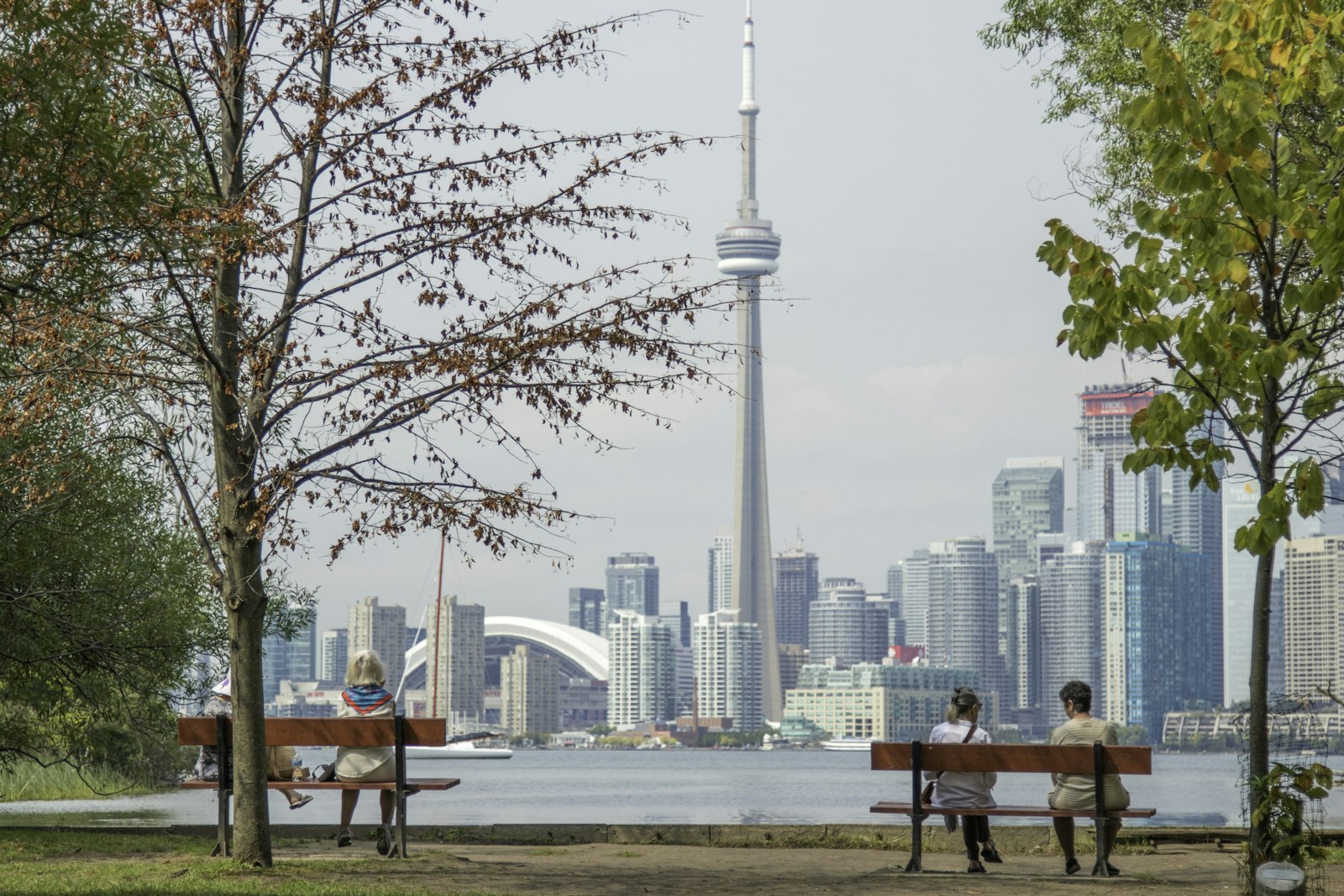
Pictures: Toronto from Unsplash; Sydney Opera House, Big Ben by Julia temer, and the Statue of Liberty by Jorge Royan (CC BY-SA 3.0) from Wikimedia Commons.
Canada
Canada still offers a study to work pathway that many students value: a study permit at a designated learning institution, up to 24 hours per week of off-campus work during terms, and a post-graduation work permit of up to 3 years for eligible graduates. At the same time, Canada has tightened the front door: most applicants now need a provincial or territorial attestation letter, proof of funds for 2026 starts at $23,448 for a single applicant outside Quebec, and Express Entry selection in 2026 targets specific occupational categories. See our student visa, work permit, and express entry pages for detail.
United States
The United States has widened online screening for student and exchange visitor visa applicants. Covered applicants are instructed to set their social media profiles to public so consular officers can review them, and the screening was extended to further visa categories effective October 1, 2026. For students, this means the visa interview now includes a review of online presence alongside the usual questions about admission, finances, and intent.
United Kingdom
The United Kingdom has shortened its post-study Graduate visa. For applications made on or before December 31, 2026, bachelor's and master's graduates receive 2 years; for applications made on or after January 1, 2027, they receive 18 months. Doctoral graduates still receive 3 years. The visa cannot be extended, though holders may be able to switch to a different visa, for example a Skilled Worker visa. The shorter window leaves less time to convert post-study work into sponsored employment.
Australia
Australia has raised the cost of applying and the funds students must show. From July 1, 2026, the standard Student visa (subclass 500) application charge is AUD $2,500 for the main applicant, and applicants must show living-cost funds of AUD $29,710 a year on top of first-year tuition and travel, plus a Genuine Student statement. Australia also plans its international student intake, with a National Planning Level of 295,000 new commencements for 2026, so places at individual institutions are allocated rather than open ended.
Scope of our services. Fusion Heights advises on international study, especially Canada. We are open to inquiries on the United States, the United Kingdom, and Australia. Ask us about any of these destinations, and we will tell you plainly what we can help with.
Choosing the right province, city, and institution is a personal decision. Our advisers help you weigh study goals, community, and practical matters together. See how admission services work, or ask us a question.